Dermal & Matrix Research · 5 Compounds
Copper Peptides
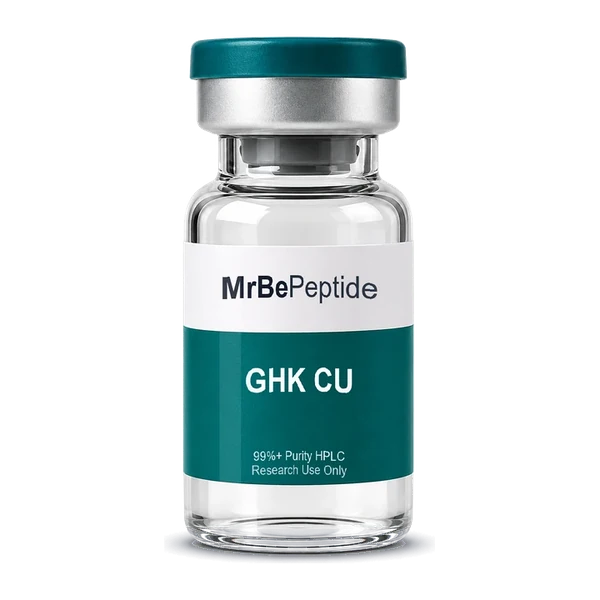
Copper peptide research compounds: GHK-Cu 50mg and 100mg plus the GLOW and KLOW blends that contain it, 99%+ HPLC purity, third-party COA per lot. Research use only.
Peptide Blends
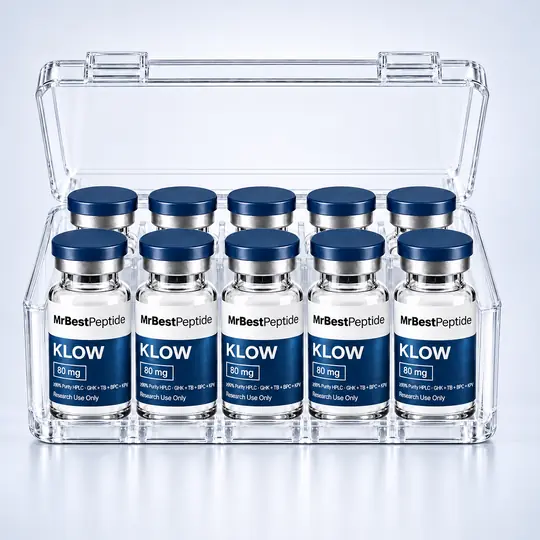
KLOW 10-Pack
KLOW four-peptide blend, ten 80mg vials in a protective case.
$56010 vials / case
Peptide Blends
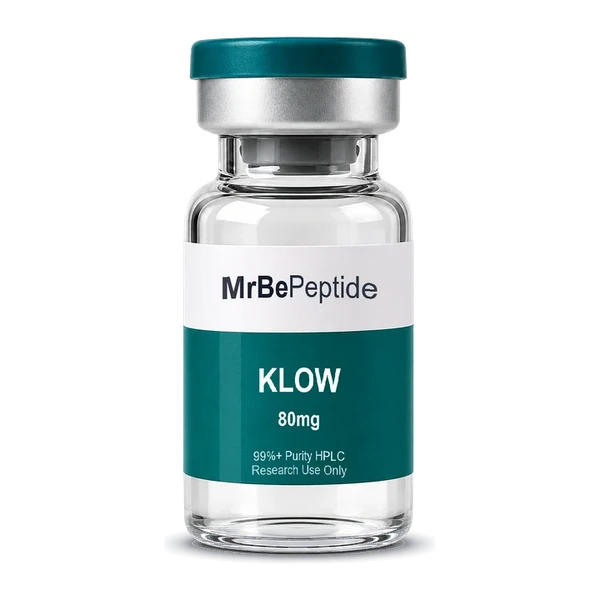
KLOW
Four research peptides freeze-dried into a single 80 mg vial. 99%+...
$10080mg vial
Compound Class Notes
About Copper Peptides
A copper peptide is a peptide that coordinates a copper(II) ion. The one carried here is GHK-Cu: the tripeptide glycyl-L-histidyl-L-lysine, isolated from human plasma in 1973, bound to one Cu(II) ion through its terminal amine, a deprotonated amide nitrogen and the histidine imidazole. The complex is a blue lyophilised powder; the free tripeptide is white.
GHK-Cu is sold as a single compound in 50 mg and 100 mg vials and is the largest component by mass in the GLOW and KLOW blends, which is why those vials are also blue. The GHK-Cu monograph documents the chemistry, the studies indexed for it and its certificates.
Testing a copper complex has one step more than testing a plain peptide. HPLC purity is measured on the peptide ligand under acidic conditions, where the complex dissociates on column; identity is confirmed against the expected mass; and the copper is evidenced by the appearance recorded on the certificate and, where reported, by a metal assay. Certificates in the archive for GHK-Cu lots report purities in the 99.5 to 99.95 percent range.
Copper-binding peptides compete with other chelators and with histidine-containing peptides for the metal in solution, which is relevant to analytical work on blends and to any assay design that includes EDTA or other chelating buffers.
Browse By Class
Other research categories
Bulk Research Sets · Save 55% · 38 items10-Vial Bulk Kits →
Growth Hormone Axis · 8 itemsGHRH Analogues & GH Secretagogues →
Metabolic & Incretin Axis · 6 itemsGLP Receptor Agonist Peptides →
Alpha-MSH Analogues & Fragments · 3 itemsMelanocortin Peptides →
Multi-Pathway Co-Lyophilized Vials · 10 itemsPeptide Blends →
Bioregulators & Neuropeptides · 6 itemsShort Regulatory Peptides →
Cellular Energy & Redox Cofactors · 3 itemsSmall Molecules & Coenzymes →